The record is the product
An airworthiness record outlives the aircraft, the operator and the software. We design for what has to still be readable in fifteen years, not for what demos well this quarter.
AerSynx was written inside a continuing airworthiness organisation rather than next to one, by people who had bought the tools first: one for maintenance, one for stock, spreadsheets for everything they left out. None of them was wrong on its own. Together they meant the same aircraft had four answers and no way to tell which one an auditor would accept.
This is the distillation of that — kept only where somebody needed it on a Tuesday.

Two years, five turns. Each one started with a week that went wrong.
A directive review takes eleven days. Three people hold the truth in three files. None of the files agree, and the one that is right is the one nobody opened.
Directives, tasks and life-limited parts move into one place for a single aircraft. The review takes an afternoon. The point is not the speed — it is that there is one answer to ask.
Scanned technical records are read and attached to the aircraft, engine or component they belong to. Evidence stops being a folder name and starts being a link.
Purchase orders, quotes, receiving and shop visits join the same chain, so the part on the aircraft and the invoice for it stop living in separate systems.
Work orders, labour and shop visits move onto the same record. Time booked against a task becomes the labour line on the invoice, so the maintenance organisation and the CAMO stop reconciling two versions of the same week.
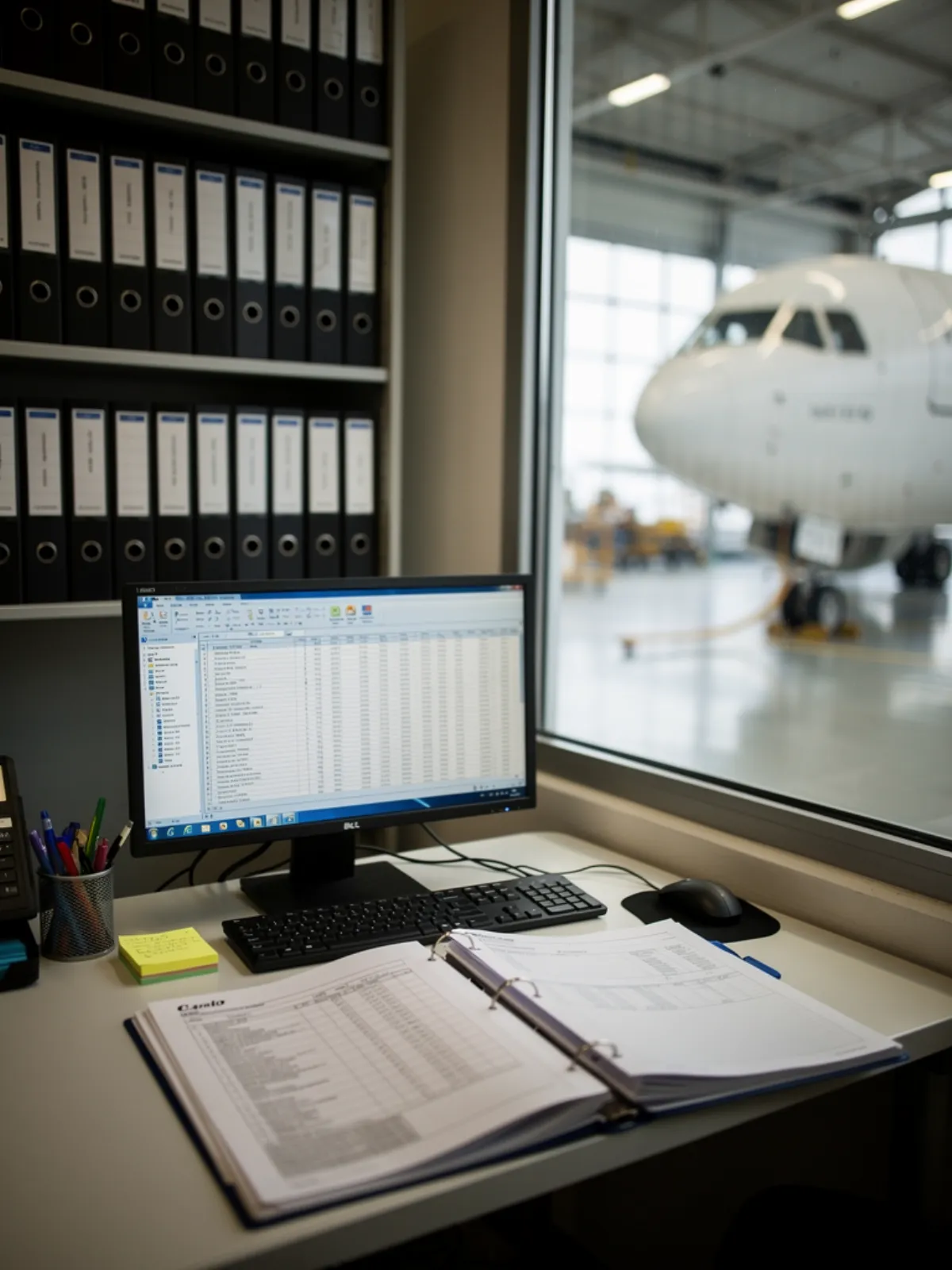
Every module started as a problem someone had that week: a directive review that took eleven days, a redelivery that found its missing records at the inspection, a part received twice because two systems held the same stock. Nothing here was designed in a workshop — and most of it is no longer about continuing airworthiness at all.
Life limits are absolute. Overdue is strictly before today. A record is evidence only if it resolves to the same aircraft. These rules are written down, tested and enforced by the code, not by training.
A life limit approaching in CAMO opens the demand in Supply. Time booked against a work order becomes the labour line on the invoice. The part fitted to the aircraft and the paperwork that proves it sit on one chain — nobody re-keys a number the system already holds.
Every action in the platform is named individually, and each can be granted or withheld per title and per person. Who changed a next-due date, and when, is a question the system answers — not one you ask around the office.
An airworthiness record outlives the aircraft, the operator and the software. We design for what has to still be readable in fifteen years, not for what demos well this quarter.
If we have not measured something, we do not claim it. That rule costs us marketing copy regularly, and we keep it anyway — a claim an auditor can disprove is worse than no claim.
Every question has exactly one screen that answers it. A second screen that answers the same question differently is how records start lying.
Features come from technical records offices, planning desks and stores counters. If nobody can name the day they needed it, we do not build it.
Continuing airworthiness is one part of a working day. Around it sit the stores counter, the hangar floor, the lease desk and the quality office — and each has usually been handed its own system, its own spreadsheet and its own version of the same aircraft.
That is the problem we work on. Not a better records tool. One operation where CAMO, maintenance, supply, lease and quality read and write the same aircraft.
Put the whole operation on one aircraft record. Directives and life limits in CAMO, work orders and labour in Part-145, stock and purchase orders in supply, deliveries and redeliveries in lease, audit and sanctions in quality — one record underneath all of them.
Nobody re-types what another desk already entered. A limit approaching in CAMO opens the demand in stores. An hour booked in the hangar becomes a line on the invoice. The engineer does engineering, the buyer does buying, and neither spends the afternoon reconciling the other's spreadsheet.
Depth before breadth. In a regulated environment a module that is nearly right is a module that is wrong, so each area is finished to the standard a reviewer would accept before the next one opens.
The company is registered in Estonia. Engineering and support sit in Antalya, inside the timezone most of the operators we build for already work in.
You will talk to the people who build it, not to an account manager who relays the question. The first conversation is with someone who can open the code.