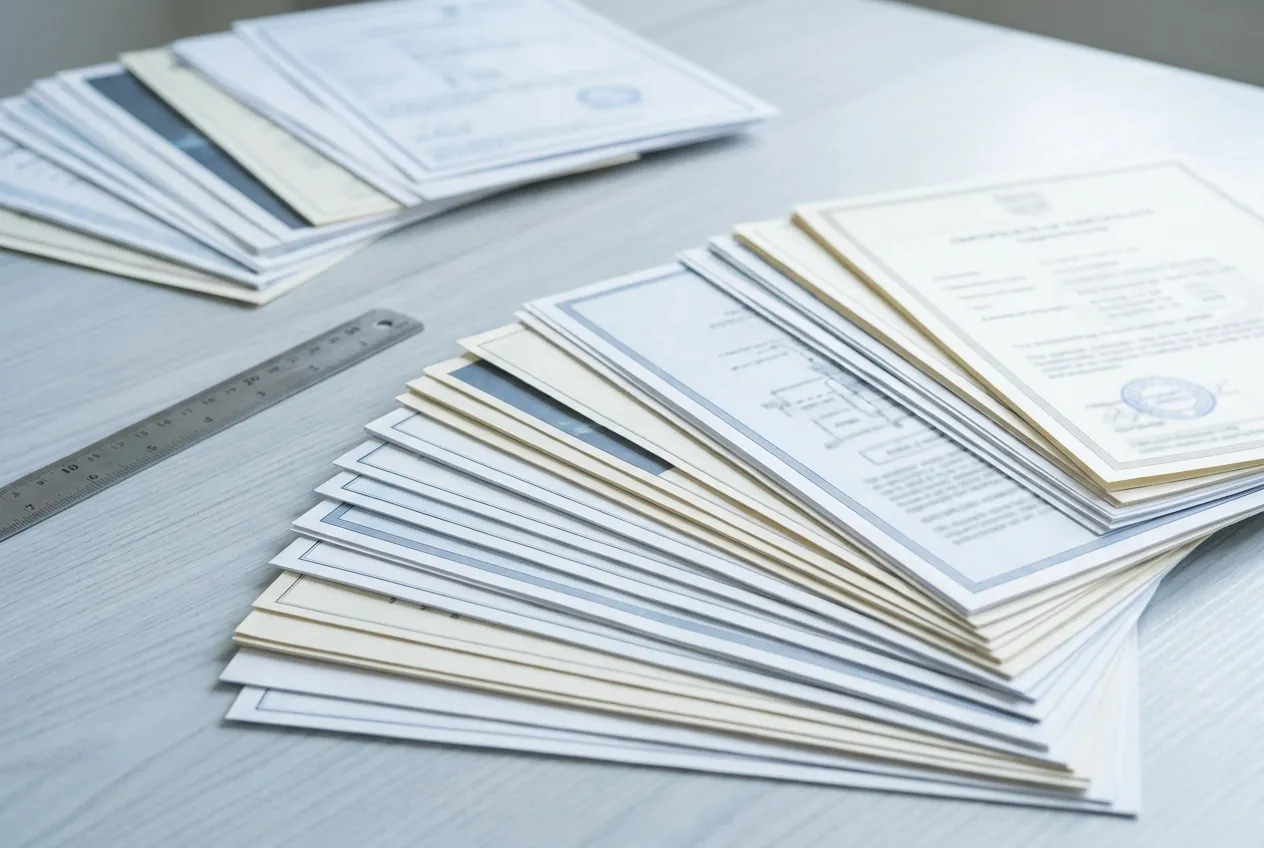
Closing a redelivery without a records gap.
A records gap found at handover is three problems at once: a lease dispute, a value write-down, and weeks of hunting through years of history. By the time the buyer's team finds it, the leverage is theirs.
The gap isn't created at handover. It's created over years.
Redelivery feels like a document-collection exercise you run the week before the aircraft moves. It isn't. The gap was opened the day a part was swapped, a component overhauled, or an AD closed — and the change was never captured against the record. Handover is just when you find out.
You can't search your way out of a gap that was never digitized. A missing Form 1 for a part that was swapped four years ago doesn't become findable because the deadline is close — it becomes a phone call to a shop that may no longer have the file. The only fix is to capture every change against the record when it happens, not reconstruct it at the end.
Start from the conditions — not a PDF read the week before.
The lease redelivery conditions become a live checklist the day the transition opens, not an appendix someone skims at the eleventh hour. Each condition maps to the records that satisfy it, so progress is visible from the start and nothing is discovered late because it was buried in clause language no one revisited.
Build the IATA binder as you go.
Technical records are packaged in the IATA A–P structure, and each item is linked to the evidence that backs it as the work happens. The binder is assembled continuously over the life of the asset — not reconstructed in a scramble once redelivery is announced. When the day comes, it's already there.
A binder assembled as you go is a binder you trust. The alternative — rebuilding it from memory and email threads — is how gaps hide until the buyer opens section H.
Decide title vs replacement on an equipment change.
When a part is swapped during the lease, you need to know what you're getting against what you gave up. The removed (title) part is scored against the replacement on the criteria that move value — Next SV, LLP remaining, AD status, and concessions — before the change is accepted, not after it's already in the binder.
Deterministic scoring plus an AI-written narrative are available today. A full eight-section back-to-birth comparison report is coming soon — on the roadmap, not yet shipping.
The master-record gate won't let a gap through.
A position-aware completeness check guards the transition. If a required master record is missing for an equipment position — and a narrowbody landing-gear ship-set is six positions, not one — the transition is blocked with a per-position breakdown. A gap can't quietly slip past the gate and surface at handover.
The gate is the safety net. Instead of trusting that someone remembered every position, the system refuses to proceed until each one is accounted for.
Prove it at handover — the checklist is the proof.
Every checklist item carries its linked record — OCR-complete, analyst-signed — and an immutable audit entry. When the buyer's team asks for the basis behind a line, the answer is already attached. There's no separate evidence binder to assemble: the records checklist itself is the proof of completeness.
The proof was built alongside the work, so handover isn't a defense — it's a read-through of an audit trail you've kept all along.
Four ways a redelivery opens a gap.
- Records collected only at the end — turning the last weeks into a frantic hunt through shops and inboxes.
- A missing Form 1 for a swapped part, discovered by the buyer — now it's their leverage, not your oversight.
- A checklist kept in a spreadsheet, separate from the records — so "done" means a green cell, not a linked, verified document.
- An equipment change accepted without comparing the part you're getting to the one you gave up.
A gap you never opened is a dispute you never have.
Conditions as a live checklist, the IATA binder built as you go, an equipment change scored before it's accepted, a position-aware gate that won't let a gap through, and the proof attached at handover — that's a redelivery you close on your terms.
Bring the aircraft you're redelivering.
We'll turn the lease conditions into a live checklist and show you exactly where today's records sit against handover.